
Debrief: The Pacers tried Ben Sheppard at many different positions. He's meant to play just one.
Sheppard's season was bumpy for understandable yet disappointing reasons.
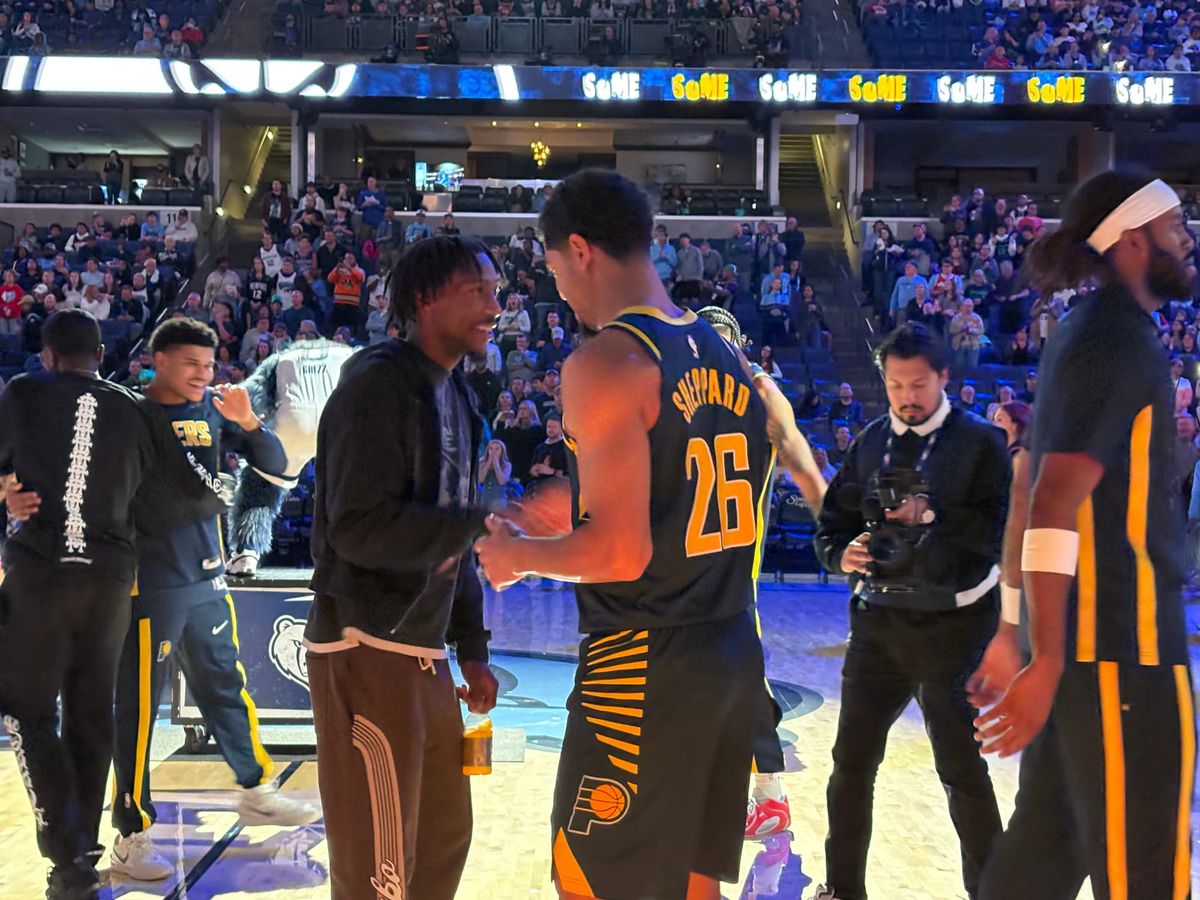
INDIANAPOLIS – It's opening night, and the Pacers are playing the Thunder in an NBA Finals rematch. Ben Sheppard is coming off the bench, and he's about to have a demanding day at the office.
Andrew Nembhard leaves the game at halftime due to injury. Aaron Nesmith fouls out. By the end of the outing, Sheppard is third on the Pacers in minutes, logging 39 in a double overtime loss. He had 15 points, eight rebounds, and four assists.
Two days later, Sheppard started at one of the guard spots with Nembhard out. That game was in Memphis, and Bennedict Mathurin took on most of the lead ball handling duties in the backcourt that night. He, too, got hurt during that game and exited in the third quarter.
And so by the Pacers third game of the season, Ben Sheppard was starting and playing point guard. The opening five, if you'll recall, was Sheppard alongside Aaron Nesmith, Pascal Siakam, Jay Huff, and Isaiah Jackson. Yes, that really happened.
 Tony East
It seems like yesterday and 10 years ago. And that's a fitting description of Sheppard's 2025-26 season. At times, he felt so close to taking a step forward in one way or another. At others, he felt very far from his expected growth in year three.
Early in the campaign, when he was playing point guard and wing and off-ball guard and... many sorts of other roles on defense, he felt far from growth. The Pacers would have loved to see Sheppard add some positional versatility, but he was thrown into the deep end early and didn't produce.
Last November was one of Sheppard's worst shooting months as a pro. Playing out of position was a factor, as were more arduous roles. But those truths don't excuse how off the third-year guard was from the field.
From opening night until the end of November – 20 games – Sheppard shot 21/83 from deep. That's a healthy volume number but, obviously, dismal accuracy. From October 25 to November 24, a full month, he went 11/64 from beyond the arc. It's hard to forget, and his two-point finishing wasn't much better.
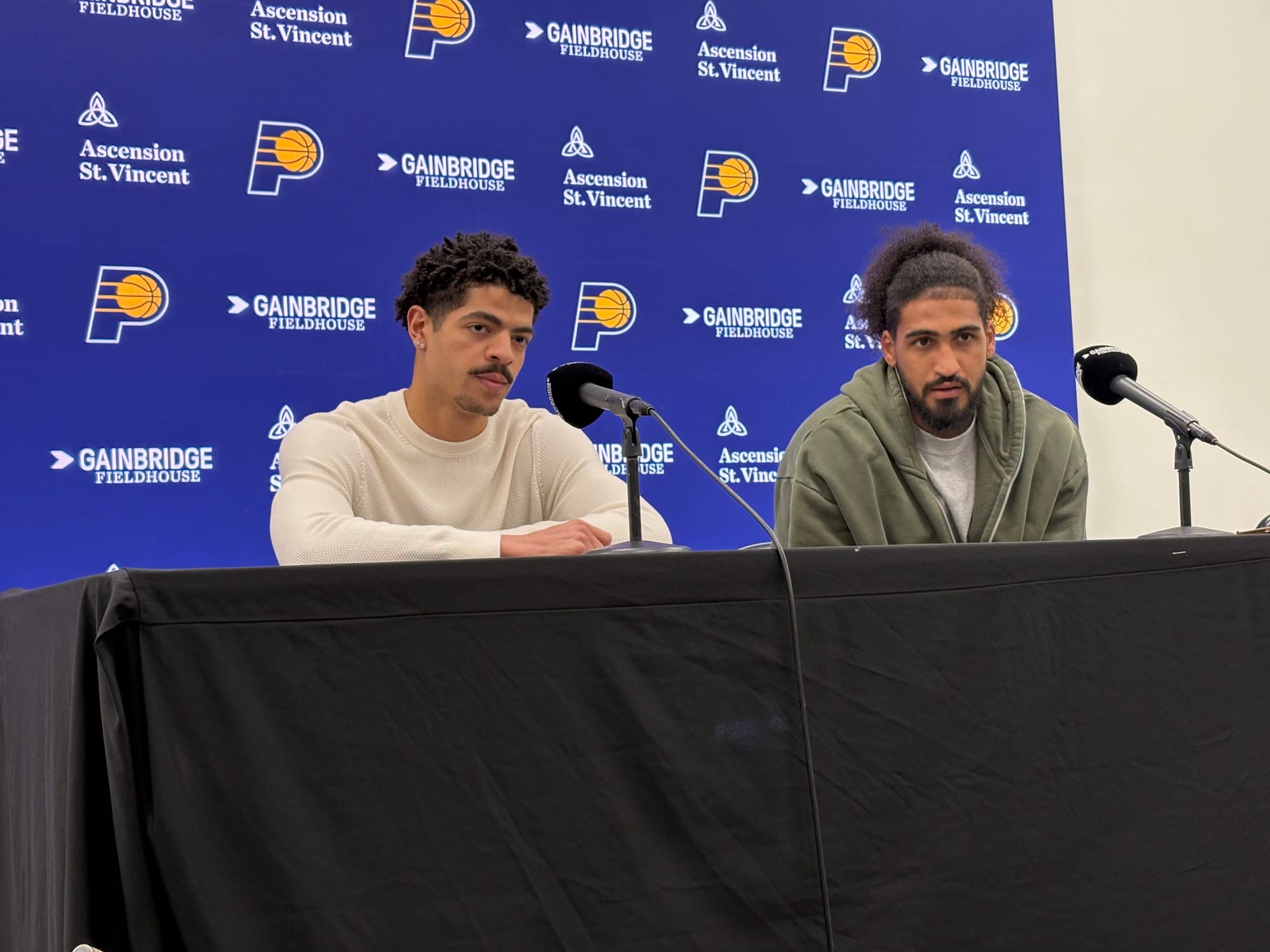
Not only was Sheppard not taking steps forward to begin year three, he appeared to be regressing at his most important offensive skill in jump shooting. "The start of the year, all the injuries and all that stuff that popped up, I was asked to do a lot of different things. 1, 2, 3 (positions), played most of the guard positions all year," Sheppard said.
Slowly, some normalcy returned. Nembhard was back on the hardwood by November 8. T.J. McConnell debuted on the 11th. Mathurin returned six days later. The guard rotation was back to what it was supposed to be, and minutes for the likes of RayJ Dennis, Monte Morris, and others faded away.
By the end of the month, Sheppard was making shots again. He hit 10 of his 17 triples in a five-game stretch before suffering a calf injury that kept him out for nearly a month. That absence didn't slow him down.
For the remainder of the season post-injury, Sheppard shot 60/144 (41.7%) from deep. 48.3% of his field goals went in. Some of his other numbers dipped as he had the ball less often, but he was much better at the things he's supposed to be good at.
Therein lies the challenge of evaluating Ben Sheppard's season. Per minute, he averaged his best-ever numbers in scoring and assisting while also reaching a career-high mark in three-point percentage, field goal percentage, and true shooting. Yet when asked to scale up his role, Sheppard struggled.
Sheppard played 161 minutes this past season with none of Nembhard, McConnell, Mathurin, Quenton Jackson, Tyrese Haliburton, Kam Jones, or Dennis on the floor – a.k.a anyone who could have reasonably been considered the Pacers lead ball handler at a time this season. In those minutes, Sheppard shot 51.9% from two and 28% from three with 48% of his shots coming from beyond the arc. He had 14 assists and 8 turnovers (1.75 assist-to-turnover, if you care about that).
When one of those points guards joined him on the hardwood? Things were much, much better. 54.6% of his two went in. 35.6% of his outside shots dropped, and nearly 60% of his total shot attempts were from beyond the arc. Even in off-ball roles, he had 84 assists to 29 turnovers (2.90).
When Ben Sheppard was asked to do Ben Sheppard things, he was generally as effective as he's ever been, if not slightly more so. That's good. That player has been in playoff rotations for two deep runs.
He started the season very poorly, though, and first impressions go a long way. Those who tuned out after the Pacers poor start didn't see Sheppard recover.
But the 24-year old was not able to succeed in a bigger role. His shot creation off the dribble didn't pop much until late in the season (he had career low shooting percentages at the rim despite upping his volume), his passing didn't feel more threatening, and he wasn't able to generate foul shots. Mistakes, albeit few outside of missing shots, crept into his game.
Sheppard's pitch for minutes is that he's a low-mistake player. His turnover rate is incredibly low, he makes just enough of his shots, and his defensive effort is always impressive – though he's close to average in effectiveness. Still, a good-enough shooter and passionate defender has a role on 30/30 NBA teams.
The book is never written on a player's career after three seasons, but year three for Sheppard may have shown that his role should be exactly that – a backup wing who is asked to shoot and defend. As his role grew, his strengths faded.
"Played most of the guard positions all year. So I was able to figure out things in my game that I didn't know I had and just experiment," Sheppard said at his end-of-season exit interview. "I think I learned a lot this year just in terms of all the different positions that I played this year. It's been a good learning experience."
It may not be fair to judge Sheppard, or anyone, in a crappy season like the one the Pacers just had. It was the first time the team has been bad in Sheppard's entire career. "I feel like our locker room is filled with winners. When things aren't going our way, there's just a different feeling," he said.
There's nothing wrong with being a good role player. Every good team has many of them. The Pacers tried to see if Ben Sheppard could be more than that in a losing season, but the results weren't promising when he played in more demanding spots. But if he's back holding his old post going forward, with a better team around him and more personal experience doing harder things, Sheppard might see this season pay off with more consistent successes.
Thank you for reading. Jay Huff's debrief coming next, presumably on Wednesday. Sign up below and it will be sent straight to your email inbox.

Comments ()