
Debrief: Aaron Nesmith's 2025-26 summed up the Pacers season perfectly
Nesmith went through everything the Pacers did on a micro level.
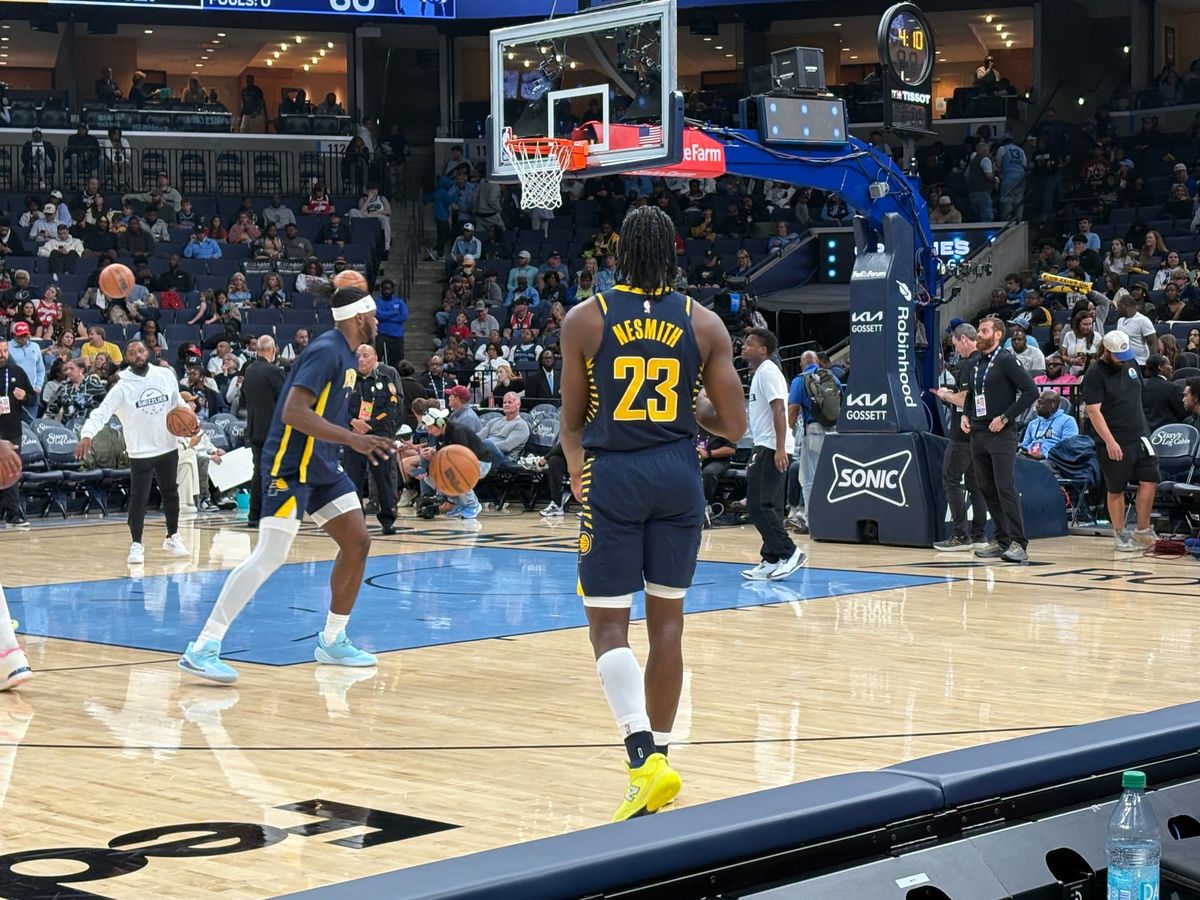
INDIANAPOLIS – How would most define the 2025-26 Pacers season? The gap year phrase was thrown around perhaps too much, but during the in-between the Pacers dealt with countless injuries, tried to maximize development opportunities, hoped to see progress from veterans, and experimented when they could.
Most players on the roster had their season fall into (at least) one of those categories. Tyrese Haliburton, Johnny Furphy, and Obi Toppin were injured. Jarace Walker and Ben Sheppard were given developmental chances. Jay Huff, Micah Potter, and Quenton Jackson were put on the court in the name of veteran progress. Andrew Nembhard experimented at a different position – so did others.
And then there's Aaron Nesmith, who is the intersection of every defining trait of the 2025-26 Pacers season. He was injured, playing in just 45 games. Among Pacers players Nesmith and older (aka the veterans) who spent the entire season with the team, only Toppin played in fewer games. Nesmith was given chances to develop, flinging himself toward the rim more often and taking more mid-range jumpers. He was one of the veterans the team tried to see progress from, both in new skills and in refined classic traits. And he played all sorts of new roles and positions as the team experimented.
 Tony East
Nesmith never got a rhythm, just like the team. He had small personal wins – like a dominant 32-point performance in Milwaukee – and painful losses. Perhaps no player better summarizes the gap year (outside of Haliburton for different reasons) than Aaron Nesmith, who had a challenging campaign.
"Obviously the season didn't go the way that we wanted it to go... But we learned a lot, guys got a lot better, got put into different situations," Nesmith said. "So we still take it as a win at the end of the day."
When the Pacers were in Los Angeles in early March, I asked Nesmith about his career-low two-point percentage. Some of those struggles could be easily traced to team context. But Nesmith's explanation was simple: He never had a chance to get any rhythm.
More specifically, he talked about hardly ever playing in several games in a row. That tracks. Nesmith played in the Pacers first nine games before missing one. He reached 11 in a row from late December to mid-January, his longest run of the season. After playing in eight-straight games from March 13 to 27, his season ended.
The Pacers played in 23 playoff games during their NBA Finals run. Nesmith appeared in all of those consecutively. Then in 2025-26, he didn't even make it to half of 23 straight games. Injuries were clearly a defining trait of his season.
So were development opportunities. A career-high usage rate is the easiest number to point to there. He logged 6.4 drives per game, a big jump from his 3.8 in 2024-25. The Pacers wanted to test his shot-creation abilities.
Nesmith isn't a non-factor as a rim attacker, but he is clearly better suited as a play finisher. As mentioned, he ended this past season with a career-low two-point percentage. Not previously mentioned: He did so by quite a bit, knocking down 45.5% of his shots inside the arc. The season prior? That number was 58.7%. He had only been below 54% once in his career prior to the most recent campaign.
His rim finishing numbers tanked. With difficult defensive assignments and more need for off-the-dribble juice, Nesmith's per-minute numbers suffered in other areas too. His three-point percentage dipped. He is well-suited for a fourth option role and can handle the occasional drive, but he was asked to do too much in his sixth season. A more normal role will drastically improve his statistical production.
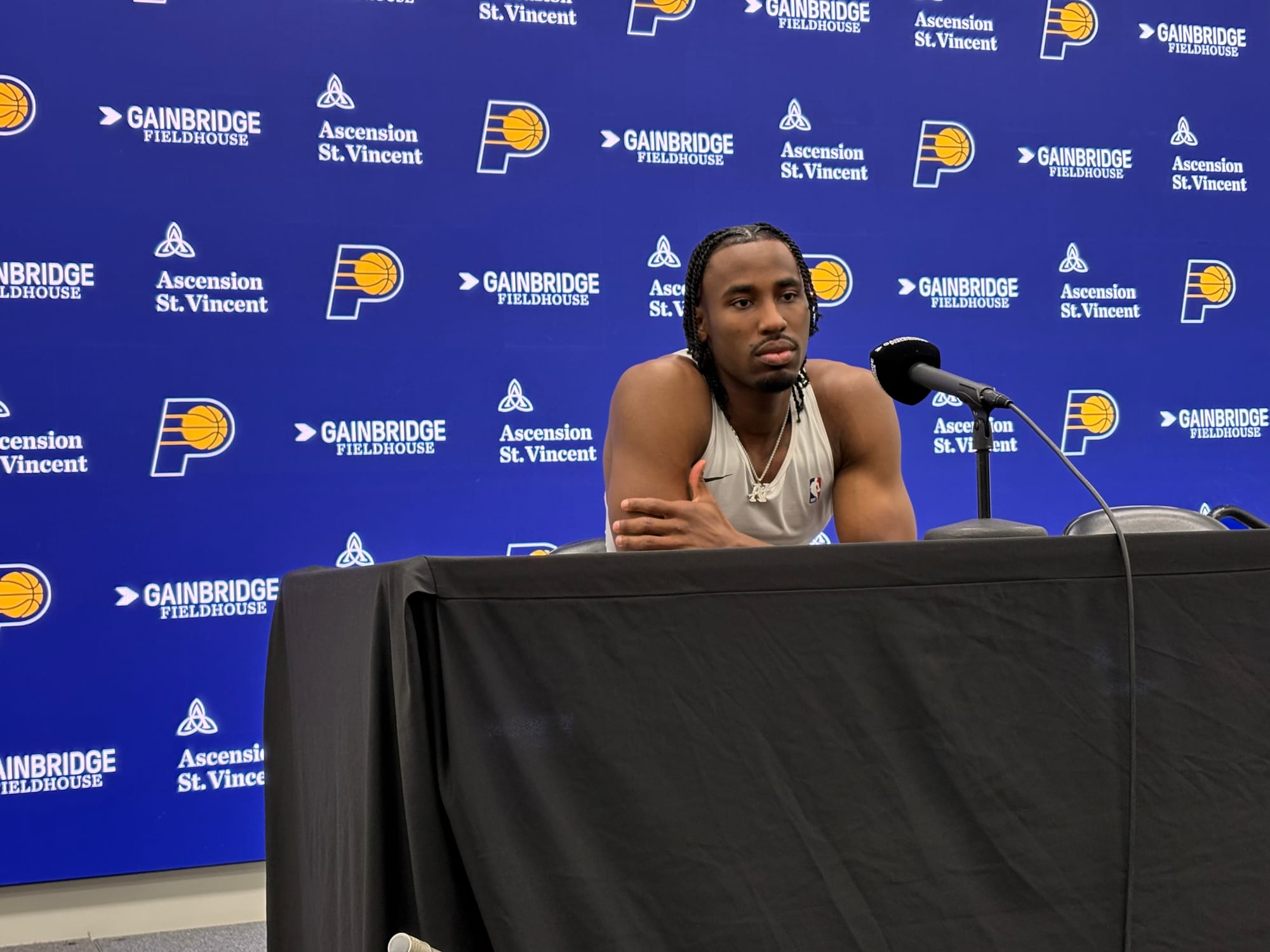
"People got put in different roles or responsibilities. Everybody was asked to do a little bit more," Nesmith said. While he will have fewer responsibilities going forward, he will be more prepared for difficult tasks. "When things are asked of you and you're asked to do greater things or bigger things in a moment, it's not your first time being there anymore."
As it pertains to progress from veterans, the Pacers hoped to see that more with unproven reserves. Nesmith is proven and not a reserve. He did continue to be money from the corners and gnarly as a defender, and his passing did improve. There was some progress despite the hurdles created by a too big role.
All that's left is experimentation. Nesmith's rise in responsibility alone could be considered an experiment, but he was also starting at shooting guard in the team's third game of the season and played nearly 100 minutes in lineups alongside Pascal Siakam that didn't have a center. Some of those groups featured Johnny Furphy, and Nesmith was still a wing in those alignments. But he could switch more, which is still a different look.
Remove Furphy from the mix and there's still some court time in which Nesmith was the four next to Siakam – a five-man unit of Nembhard, Jackson, Sheppard, Nesmith, and Siakam appeared in two different games, for example. That's new, though the group was outscored by six points.
And so, in just about every way, Nesmith's season was the Pacers season. He missed games due to injury, he faced trial by fire in many roles, tried to be more involved, and played many positions – some of them new. He attempted to get as much as he could out of a challenging situation.
"I learned a lot, and I was able to see it slow the game down for me," Nesmith said. That's one of the things that I'm excited to work on this summer is just getting better at that [playmaking] aspect. So when they ask me to do it next year in certain situations, I could do it at a high level." That's what this season was all about.
Thank you for reading. I am hopeful to have stories on Quenton Jackson and Kam Jones up in the next day or so. Sign up to have it emailed straight to your inbox.
Comments ()