
How Indiana Pacers finalized back of roster to effectively end free agency
The Pacers had many decisions to make with the back end of their roster.
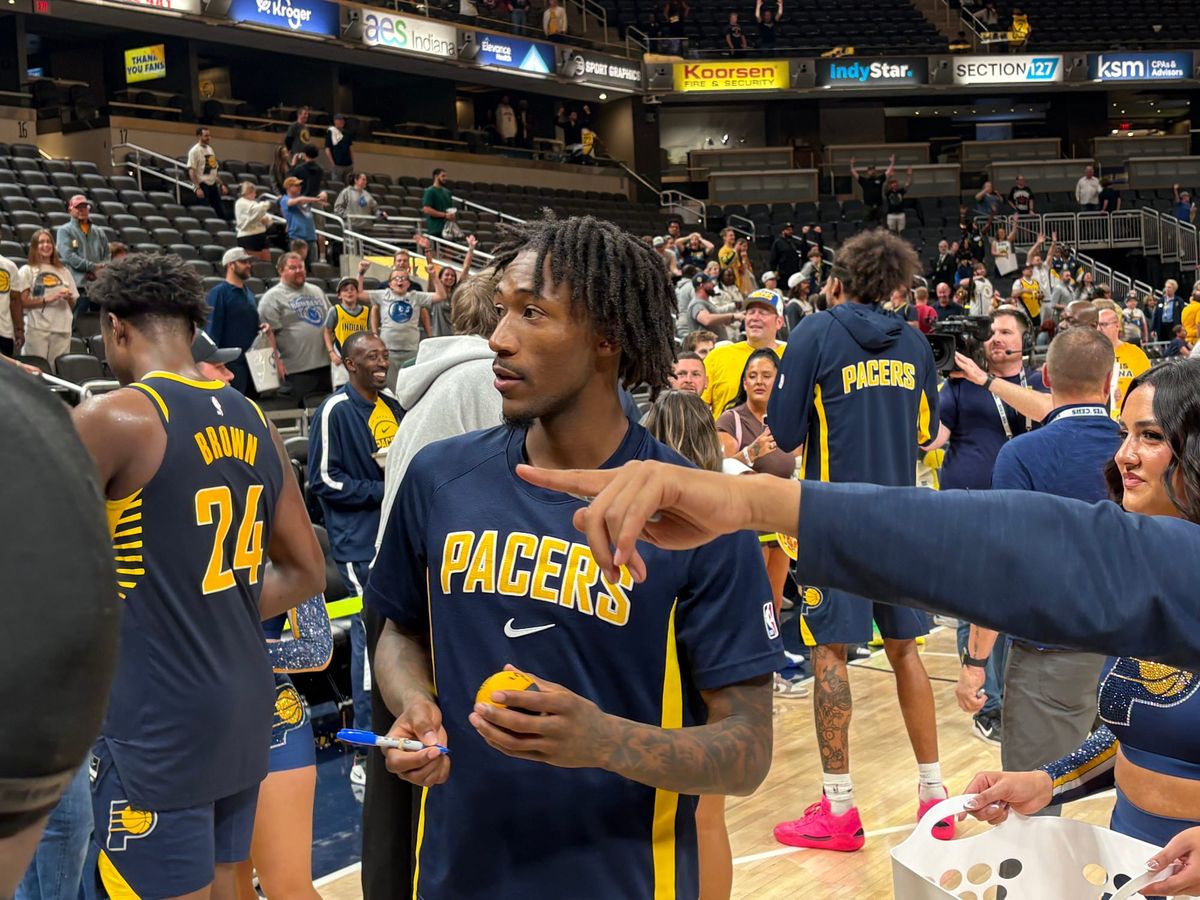
INDIANAPOLIS – It's been a while since July 15, but that was the official date (t0 me) that Pacers free agency reached its end stage.
On that day, Quenton Jackson's contract for 2026-27 – worth just under $2.6 million – became fully guaranteed for the upcoming season. That gave the Pacers 14 guaranteed contracts and just $2.23 million in space below the first apron. Since that number is less than the veteran's minimum cap hit for the current league year, it became nearly impossible for the team to make any moves after Jackson's status was formalized.
Having Jackson's contract guarantee was the right decision. It's cheap, first and foremost, making the opportunity cost an important factor. Is there a better use of $2.58 million (besides, you know, LeBron James via a minimum) than a guard that:
-Fits the Pacers system
-Has given the team rotation minutes (in a real, winning-focused season) in the past
-Will be just 28 when the seasons starts
-Has useful traits on both sides of the ball
-Is a good "vibes" guy
 Tony East
Retaining that player makes good sense. And if the Pacers needed more reason to keep him around, Jackson's contract is also non-guaranteed for the 2027-28 season at just $2.9 million. It's a value deal for a depth piece that can contribute in a pinch.
And of the Pacers projected reserves (out-of-rotation players), Jackson is clearly the best ball handler. There will be moments and situations in the coming year where he is needed. That's why it made too much sense for him to stick around and have his deal guaranteed, as noted here.
It's a pro scouting win for the Pacers, who identified Jackson's potential when they signed him to a two-way contract back in March of 2024. They were considering a few players for that opening after converting Kendall Brown's contract to a standard deal, and one of their targets ended up signing elsewhere. They focused on Jackson, developed him well over the next few seasons, and now get to benefit from those successes by having the useful guard on a cheap, multi-year agreement.
After his contract status was formalized, the only players the Pacers could have added via a standard deal using their 15th roster spot would have zero or one year(s) of NBA service. And as a team that is trying to win at a high level this season, there were few options (honestly none, outside of Braden Smith) who made sense to fill that opening.
Things can change as training camps open and other teams make moves, but my current prediction from reading the Pacers cap sheet and mapping out their rotation is that they will start the season with 14 players signed to standard contracts. They'll be able to add a 15th on a veteran's minimum deal starting in early November if they need more depth. But given their hard cap situation, waiting as long as possible to bring in additional players would be a prudent strategy.
What else did the Pacers do to fill out the back end of their roster?
With their 14 standard contracts in place, all that was left for the Pacers was their two-way contract room.
They get three of those, and at the time of Jackson's deal only one (Kobe Brown, who inked his two-way in early July) felt like a certainty.
Brown told me at summer league that he, like most, was hoping for a standard deal. But being back with the Pacers was important to him, so he'll return to the blue and gold.
“Standard [contract] is always the goal,” Brown shared with me in a loud and crowded Cox Pavillion. “But honestly… something in my gut just told me I needed to come back to Indy. And I really wanted to be here. I loved it the last two months I was there.”
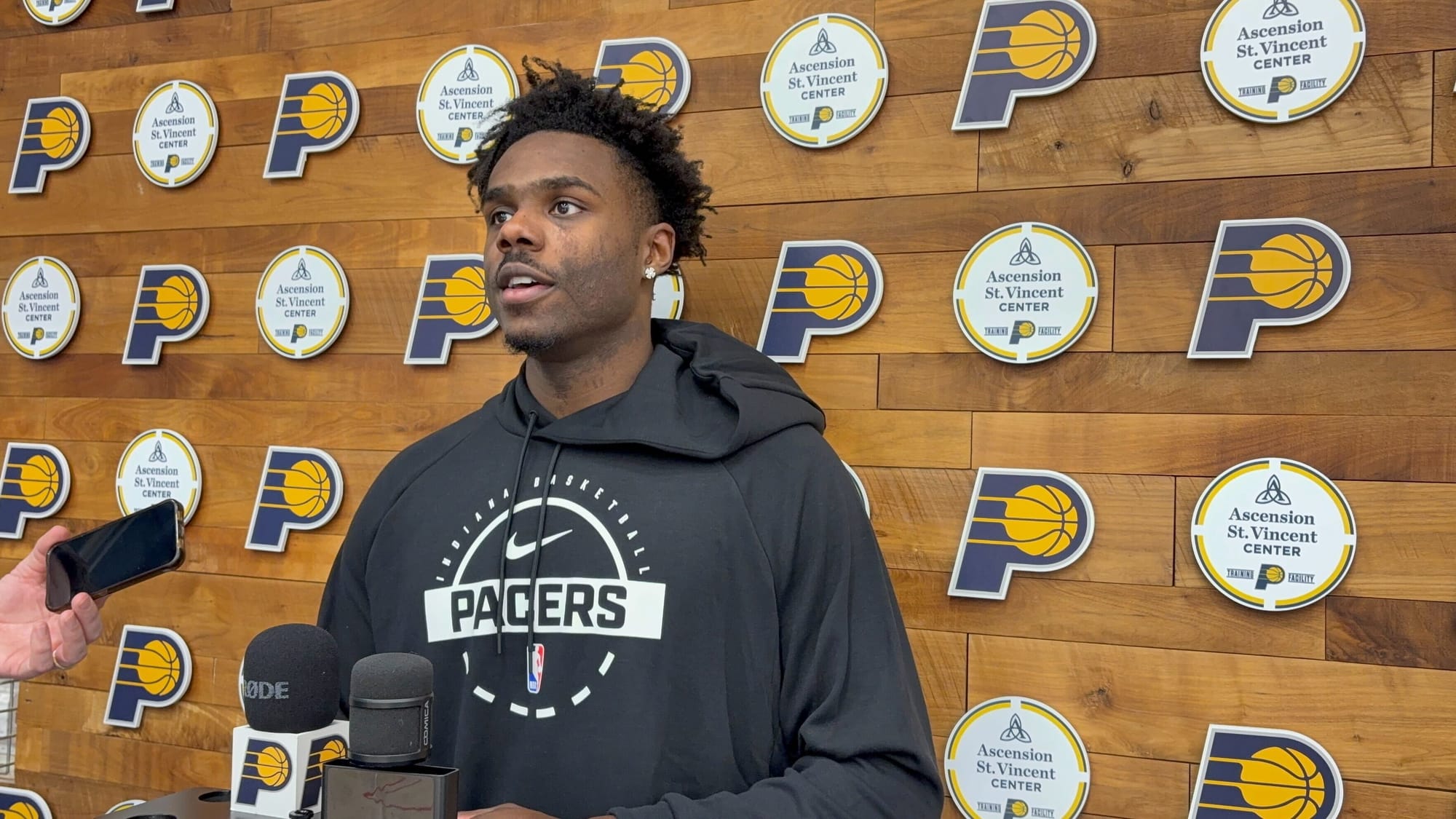
Cap geekery: Since Brown is entering his fourth year of service, his two-way contract can only be one year in length. That's not too geeky. This is: Brown has Bird Rights with the Pacers and signed a one-year deal, which typically sets up a situation where a player would receive an implicit no-trade clause since their Bird Rights would disappear if traded.
Does that mean Kobe Brown has a no-trade clause? On his two-way contract, he does not have an implied no-trade restriction. However, if Brown's deal were to be converted to a standard deal this season, he would have an implied no trade clause. There are not many scenarios, outside of a Brown mega-breakout, in which his deal would be converted to a standard contract before the trade deadline. But, still, geekery.
With Brown signed, that left a pair of two-way openings for Taelon Peter, Jalen Slawson, Ethan Thompson, and Smith. Smith, by nature of being drafted, was going to sign a contract of some kind. And technically, that could have been a standard deal since he is eligible for the rookie minimum. But, as reported here and elsewhere, a two-way deal was always the plan.
Going out of chronological order here for the sake of story clarity, Smith did end up signing a two-way deal with the Pacers. It's a one-year contract, a league source told me.
That effectively left one two-way deal for Slawson, Thompson, and Peter to compete for. That's a tough reality. Peter was a draft pick from just one summer ago and had a tidy 2025 summer league followed by a fine season for a 54th overall pick. Slawson had some eye-popping highs during his 13 NBA games to close the 2025-26 season. Thompson only had one or two dazzling outings in the association last season, but he was excellent every time he hit the G League floor and earned a spot in the Pacers rotation for about a month in December.
Those three players had drastically different summers, both in how they started and how they ended, that made the decision(s) a bit easier. The true start of the offseason for those three came as Ethan Thompson suited up for Puerto Rico instead of playing in summer league. And as jotted here, I think he was Puerto Rico's best player in early July.
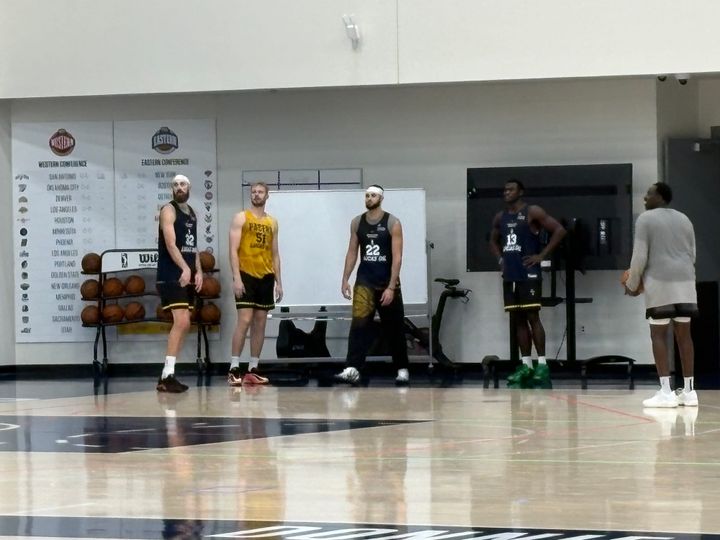
Summer league came next. Thompson was in Las Vegas for some of the action but not actually on the roster – he sat with other Pacers players on the sidelines. Slawson and Peter did play, and the comparison between the two was noteworthy.
Slawson was... well, much better. He took his year of experience within the Pacers organization and applied his improvements to Vegas basketball, fitting well in the team's system while also making it obvious what his focuses were in terms of skill improvement (drives, reading a defense, defensive communication). After posting pedestrian stats for the Philadelphia 76ers in 2025 summer league, Slawson was among the best players during the 2026 version of the competition.
Peter, meanwhile, didn't stand out. That's not to say he played poorly, his stockiness on defense remained and he canned 36% of his threes. But he had more turnovers than assists and didn't show enough downhill pressure to add non-spacing value on offense.
Slawson was better and more worthy of a two-way deal than Peter. He proved it as the two shared a stage. Peter was waived on July 20, and he has since agreed to an Exhibit 10 deal with the San Antonio Spurs. The Spurs already have all three of their two-way contract spots filled, including two by rookies Ja'Kobi Gillespie and Maliq Brown, but one wonders if a good training camp or preseason from Peter could lead to him being promoted and taking David Jones-Garcia's spot on San Antonio's roster.
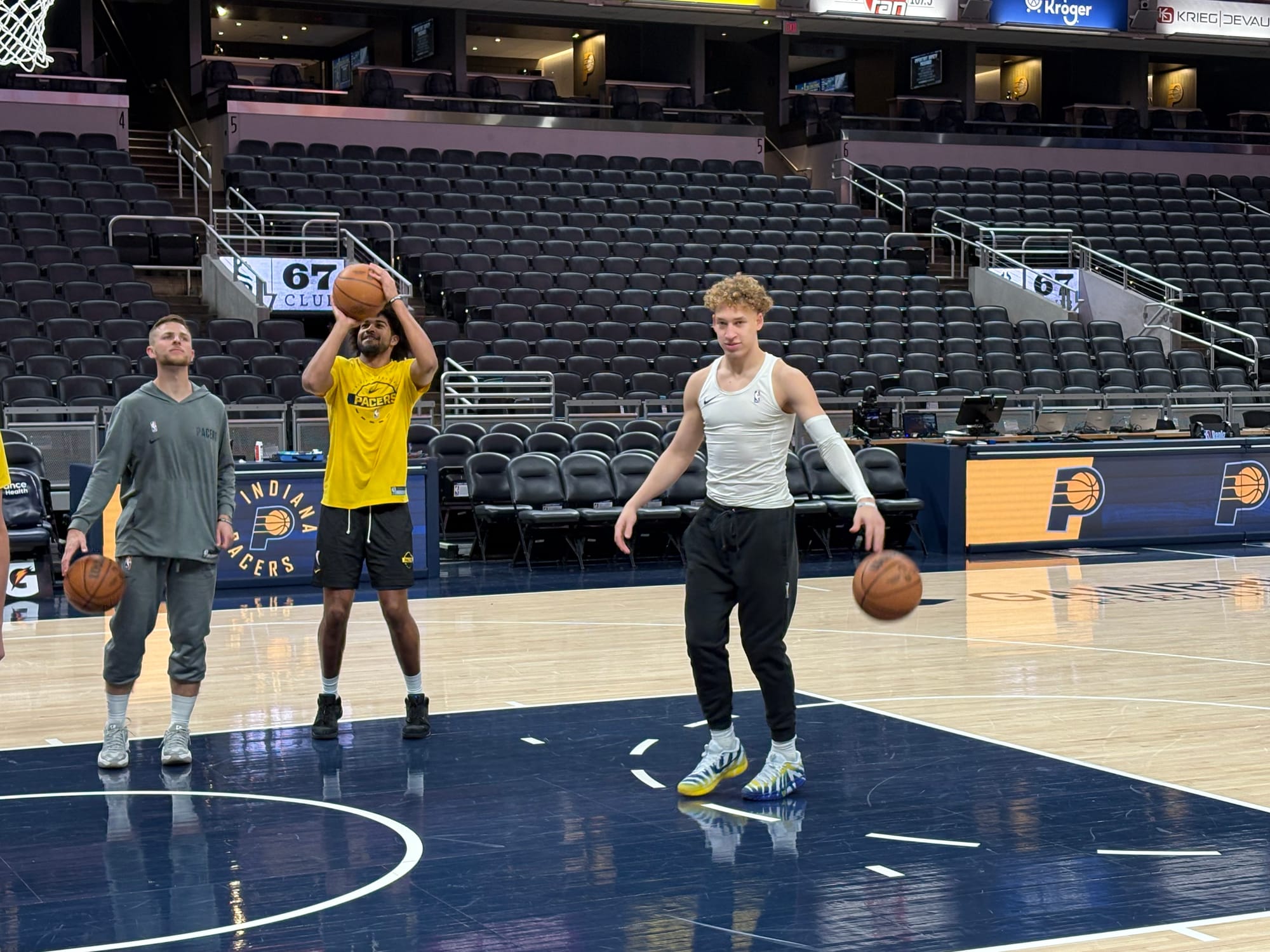
Two days after Peter was waived, Slawson signed a two-way deal with the Pacers. That put him on Brown on the roster for the coming season and left Thompson and Smith in the team's orbit for the final spot(s).
In theory, both players could have been kept: Smith on a standard deal, Thompson on a two-way. In reality, that would have been a big sacrifice of financial flexibility just to keep Thompson around.
In the end, this "problem" sorted itself out. Thompson signed a contract with Partizan Belgrade in Serbia, sending him overseas and off of the Pacers roster. He was waived on August 13, Smith signed his two-way deal four days later.
Without knowing Thompson's specific motivations (Writing on the wall? Huge offer from Partizan? Ready for what is next after fulfilling his NBA dream?), I still think this is the path the Pacers would have eventually taken.
And so, their roster is finished, barring some dramatic changes of heart in the weeks leading up to training camp. 14 players, plus Brown, Slawson, and Smith on two-ways. Next up: Exhibit 10 deals and extensions.
Also of note: Micah Potter
As noted in this story touching on Brown and Larry Nance's new Pacers contracts, Micah Potter was waived by the Pacers in early July. He never hit free agency, being claimed by the Portland Trail Blazers two days after being let go by Indiana.
I bring this up because I made the point, mostly just on podcasts, that the Pacers could have saved money against the cap by executing the following string of transactions:
-Waive Micah Potter
-Let Potter clear waivers
-Re-sign Micah Potter on a one year, veterans minimum contract
I also touched on all of that in this story, but those transactions would have A) given Potter a very small raise for the coming season and B) lowered Potter's cap hit with the Pacers (critically, it would have been the same as Nance's).
Potter was more productive than Nance last season. But there is one problem with that hypothetical listed above – it's only possible if Potter would have cleared waivers. In reality, he didn't, which says something about his contract and performance. So the above-listed strategy was not even possible.
Could it have been more likely that Potter cleared waivers if he was waived at a different time in the offseason? Maybe. But I wanted to point this out since part of the appeal of waiving Potter for Nance was apron savings for the Pacers. Time will tell if that actually matters for them this season, or if the change at reserve center will make a difference for their fortunes on the court.
Thank you for reading. Another Pacers notebook is already needed, so be on the lookout for that. Or sign up using the box below and have these stories sent straight to your email inbox.
Comments ()