
Larry Nance signs with Pacers, who do some apron juggling | Kobe Brown gets two-way
The Pacers have two new signees, but had to lose Micah Potter to make it happen.
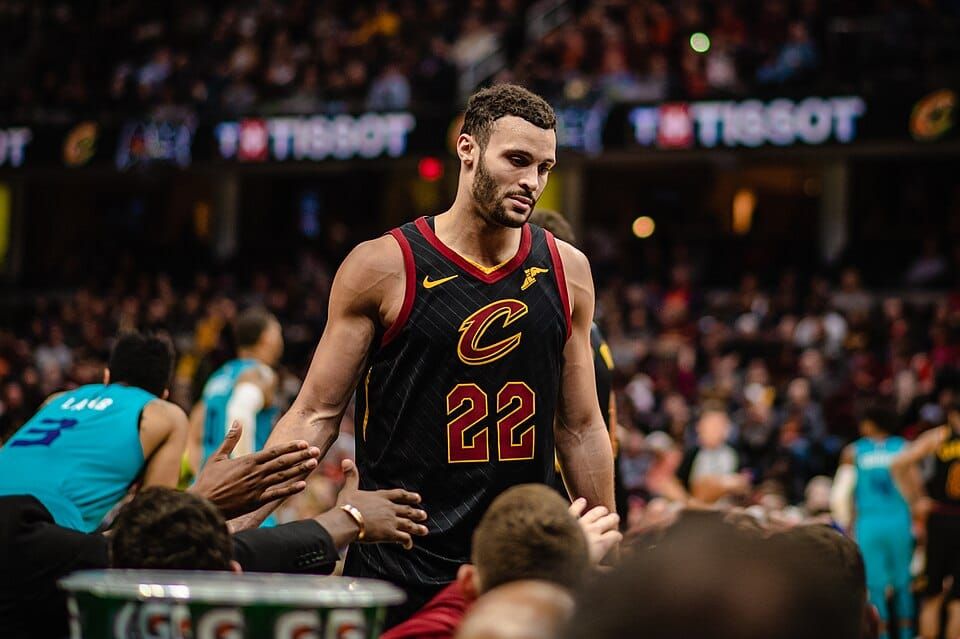
LAS VEGAS – After multiple suggestions that the Indiana Pacers could be targeting a big man this offseason, the front office struck on Thursday and officially signed center Larry Nance Jr to a contract. Don’t be fooled by his height listings — he’s unquestionably a frontcourt player and, most often across the last few seasons, a center.
Nance is a veteran. He was drafted in 2015 and has played for five franchises – all of them loved him and what he provided behind the scenes. That’s valuable, especially so in Nance's current stage of production. He’s not what he used to be, to say the least, playing less than 500 minutes in each of the last two seasons thanks to injury and skill decline.
Last year, Nance played for the Cleveland Cavaliers. He was their fourth center and appeared in 35 games, averaging 3.7 points and 2.7 rebounds per game. As two people told me of Nance, verbatim: "Everyone loves him."
 Tony East
He comes to the Pacers in a similar spot. On a depth chart, he’s their third center behind Ivica Zubac and Jay Huff. In reality, and this is purely opinion, I’d bet he’s still fourth. Instead, the third center option for Indiana could be some small-ball combination of Obi Toppin, Pascal Siakam, and (once he returns) Johnny Furphy.
Remember the Furphy-Siakam pairing last year? Pretty good. Toppin has closed many playoff games at the five. Siakam playing center was a key counter against a few teams last season, most memorably Miami. Those three can fill in enough around the Zubac and Huff minutes to give the Pacers some versatility in the frontcourt.
Then, of course, comes Nance. He’s still a technically sound rebounder and switched ball screens with decent frequency for the Cavs last year (hat tip to Caitlin Cooper’s excellent breakdown for that bit of knowledge). There are still uses for the veteran big man.
And, of course, he’s excellent behind the scenes. This story in CBS detailed that well. Ask anyone who knows Nance — he gets a glowing character review.
And he’s Pacers bound now. Per source, his contract is fully guaranteed for the coming season. It’s a veterans minimum deal, so Nance will make $3.88 million – the Pacers are on the hook for $2.45 million if it. The rest will be reimbursed by the NBA.
If you’ve been keeping up with the Pacers salary cap dynamics, you already knew that it was impossible for them to add Nance without making another move first. After signing Kelly Oubre, the Pacers were too close to the first apron and hard capped. A trade was possible but required cooperation from another team.
Waivers, however, do not require external agreements. The Pacers had two players on contracts that weren’t fully guaranteed entering Wednesday, and they opted to move on from Micah Potter and his non-guaranteed $2.8 million deal to free up space for Nance.
Potter has already been waived by the Pacers and will be a free agent if he clears waivers on Friday. He played well in his opportunities for the team last season but became a salary cap casualty.
Based purely on numerical production, Potter had a better 2025-26 than Nance. The Pacers are making a bet on intangibles (not that Potter’s are poor), a different skillset, and their versatile-yet-smaller center options by signing Nance. Plus, moving off of Potter’s cap hit ($2.8 million) in exchange for Nance’s ($2.45 million) frees up some first apron wiggle room for the front office.
That’s 13 guaranteed contracts for the Pacers and 14 standard players in total. They’re close to the first apron and are limited in who they can sign as a 15th player, the maximum allowed during the regular season. But they don’t have to sign a 15th player, which is notable as they juggle a more expensive roster.
In other free agency news
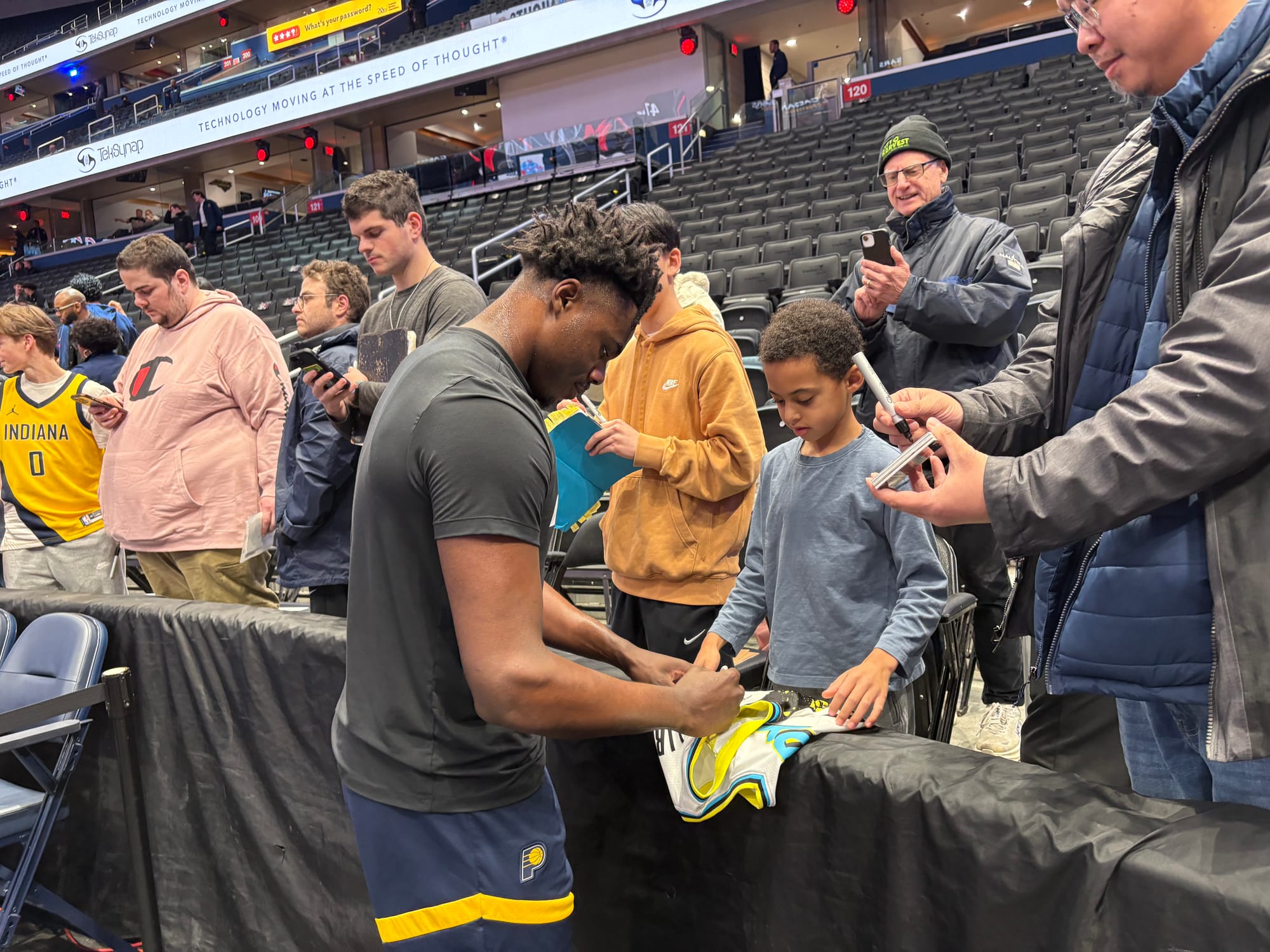
Kobe Brown is back with the Pacers. He signed a two-way contract on Thursday, marking an earned return for a player that seemed to be on the edges of the NBA after being traded from the Clippers in February.
He played well in Indiana, posting 9.4 points and 4.9 rebounds per game while fitting in more than he did in Los Angeles. The Clippers asked Brown to be more stationary on offense around their stars. Brown is more effective moving around, getting involved, and hitting the glass.
"Just the style of play. The ball never stops moving… I just feel like it’s hard not to fit in here. Everything’s random, nothing’s scripted," Brown said during the season of the Pacers.
A two-way deal is fitting for Brown. He needs reps to continue growing, but he would have been on the outside of the Pacers rotation if he signed a standard deal. And the team's cap reality makes giving an unproven player (Brown was useful for them last season, but in a small sample) a standard spot in their age 27 season risky.
Now on a two-way, Brown can still play when needed but also do his thing in the G League more often. Additional chances to play will be good for the Missouri product.
By rule, Brown can only sign a one-year two-deal. And here’s something: players who sign a standard one-year deal and have bird rights get an implied no-trade clause since their bird rights evaporate if they are moved to a different team. That doesn't apply to Brown on his two-way deal, but he would get an implied no-trade clause if his contract is converted to a standard deal during the coming season.
Two-way deals come with no cap hit. I wondered on a podcast late in June if the Pacers would be willing to only carry 14 standard players, then sign a stronger group of two-way talents to serve as a collective depth piece. Usually, two-way deals are used for development more than NBA production — and that very well may be the case for Brown. But a two-way deal that doesn’t affect the Pacers apron space, yet still gives Brown 50 opportunities to be active and play for the NBA club, is of use for depth reasons, too. That's a nice benefit for the Pacers.
He occupies one of the team’s three two-way contract slots. As of this writing, Taelon Peter and Ethan Thompson are signed to the other two. Jalen Slawson has a qualifying offer that could land him a two-way contract, and Braden Smith is going to sign one at some point.
So that’s five players competing for three spots, and Smith is all but assured his deal. I’d argue Brown is, too, given the timing of his contract, but that's not a lock. That leaves one opening for Slawson, Peter, and Thompson — though things can change during summer league play. Remember, Peter earned his two-way deal for the Pacers last summer, beating out Enrique Freeman while Quenton Jackson and RayJ Dennis held the other two-way spots.
Nance and Brown add different elements to Indiana’s frontcourt. As the possession war becomes more and more important every season, two rebounders are sensible additions.
Thank you for reading. I'm in Las Vegas for NBA Summer League and Fever vs Aces, so some on-the-ground reporting is coming your way. Sign up to have it all emailed straight to your inbox.
Comments ()